
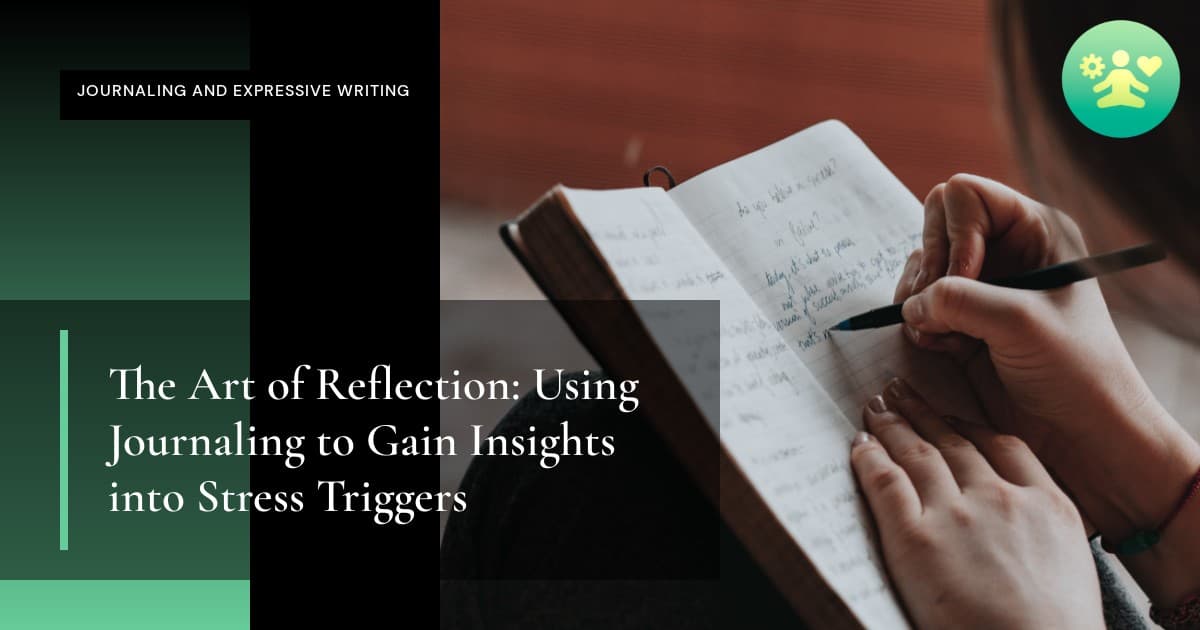
Journaling has long been recognized as a valuable tool for self-reflection and self-expression. It provides a safe space to explore our thoughts, feelings, and experiences. But did you know that journaling can also help us gain insights into our stress triggers? In this article, we will delve into the art of reflection and how journaling can be used as a powerful tool to identify stress triggers and manage them effectively.
Identifying Stress Triggers through Reflective Writing
Understanding the Power of Reflective Journaling
Reflective journaling is a practice that involves writing down our thoughts, emotions, and experiences in a non-judgmental and exploratory manner. It allows us to gain a deeper understanding of ourselves and our reactions to different situations. Through journaling, we can uncover patterns, identify stress triggers, and make connections between our thoughts, emotions, and behaviors.
Techniques for Effective Reflective Writing
To make the most out of your reflective journaling practice, it is important to employ effective techniques. Here are some strategies to enhance your reflective writing:
- Set aside dedicated time for journaling each day
- Find a quiet and comfortable space to write
- Write freely without worrying about grammar or punctuation
- Be honest and authentic in expressing your thoughts and emotions
- Reflect on both positive and negative experiences
- Use descriptive language to capture the essence of your experiences
ALSO READ
Using Prompts to Uncover Stress Triggers
Sometimes, it can be challenging to know where to start when it comes to reflective writing. Using prompts can help stimulate your thinking and guide your journaling practice. Here are some prompts specifically designed to uncover stress triggers:
- Describe a recent situation that made you feel stressed or overwhelmed. Reflect on the factors that contributed to your stress.
- Write about a recurring pattern of stress in your life. Explore the underlying causes and possible ways to address it.
- Reflect on your physical and emotional reactions to stressful situations. Are there any common symptoms or signs that indicate stress?
- Think about a challenging relationship or interaction that causes stress. Analyze the dynamics and explore strategies for managing the stress it generates.
- Write about a situation where you felt a lack of control or power. Reflect on how this contributes to your stress levels and explore ways to regain a sense of control.
Recognizing Patterns in Reflective Writing
As you continue your journaling practice, you may start to notice patterns emerging in your writing. Pay attention to recurring themes, emotions, and situations. These patterns can provide valuable insights into your stress triggers. Look for commonalities and connections between different entries in your journal. Identifying these patterns can help you gain a deeper understanding of your stress triggers and develop effective strategies for managing them.
Identifying Emotional and Physical Stress Indicators
Journaling allows us to explore and express our emotions, which can be instrumental in identifying stress triggers. Take note of the emotions you experience during stressful situations and how they manifest physically. Do you notice any specific emotions that consistently arise in response to stress? Are there any physical symptoms that accompany your stress? By becoming aware of these emotional and physical stress indicators, you can gain valuable insights into what triggers your stress response.
Analyzing Relationships and Situations in Reflective Writing
Our relationships and the situations we encounter can have a significant impact on our stress levels. Take the time to reflect on your interactions with others and the environments you find yourself in. Consider the dynamics of your relationships and how they contribute to your stress. Additionally, analyze the situations that tend to trigger stress for you. Exploring the underlying causes and dynamics can help you better understand your stress triggers and develop strategies for managing them effectively.
RELATED ARTICLES: