


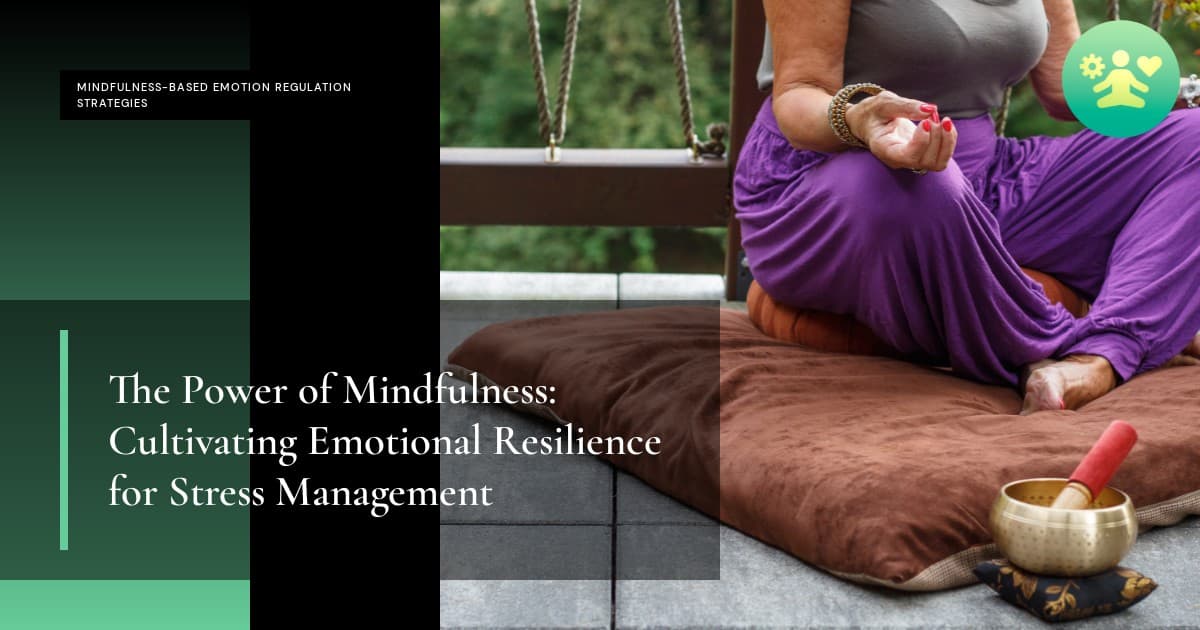
In today’s fast-paced and demanding world, stress has become a common companion for many individuals. The constant pressure and challenges of daily life can take a toll on both our mental and physical health. However, there is a powerful tool that can help us navigate through these difficulties and build emotional resilience – mindfulness. This ancient practice, rooted in Buddhist traditions, has gained widespread recognition for its ability to reduce stress and promote overall well-being.
Table of Contents
Understanding the Role of Mindfulness in Stress Management
Definition and Principles of Mindfulness
Mindfulness can be defined as the practice of intentionally bringing one’s attention to the present moment without judgment. It involves fully engaging with our thoughts, feelings, and sensations, cultivating a sense of awareness and acceptance. By being fully present and non-reactive, mindfulness allows us to develop a different relationship with stress and build emotional resilience.
The Impact of Stress on Mental and Physical Health
Stress can have profound effects on our overall well-being. It not only affects our mental health, leading to anxiety, depression, and burnout, but it also takes a toll on our physical health, increasing the risk of cardiovascular disease, weakened immune system, and digestive disorders. Recognizing the detrimental impact of stress is vital in our quest for finding effective ways to manage and mitigate its effects.
ALSO READ
How Mindfulness Reduces Stress
Mindfulness acts as a powerful antidote to stress, enabling individuals to cultivate emotional resilience and effectively manage the challenges they encounter. By practicing mindfulness, we develop the ability to observe our thoughts and emotions without getting entangled in them. This non-reactive stance allows us to respond to stressors in a more skillful and adaptive manner, reducing the harmful impact of stress on our mind and body.
Scientific Evidence Supporting Mindfulness for Stress Management
The benefits of mindfulness for stress management are not merely anecdotal but have been extensively studied and supported by scientific research. Numerous studies have demonstrated that mindfulness-based interventions can significantly reduce stress, improve emotional well-being, and enhance overall quality of life. From reducing cortisol levels to enhancing brain activity associated with emotional regulation, the scientific evidence is compelling and continues to grow.
Techniques for Integrating Mindfulness into Daily Life
Mindful Breathing Exercises
One of the fundamental techniques for cultivating mindfulness is through mindful breathing exercises. By bringing our attention to the sensations of our breath, we anchor ourselves in the present moment and cultivate a sense of calm. Simple practices like the 4-7-8 breathing technique or the mindful body scan can be easily incorporated into our daily routines to help us reconnect with our breath and reduce stress.
Body Scan Meditation
The body scan meditation is a mindfulness practice that involves systematically scanning the body, bringing attention to each area and observing any sensations or tensions that arise. This practice helps us develop a deep awareness of our body, promote relaxation, and release physical and emotional tension.
Mindful Movement (Yoga, Tai Chi, etc.)
Mindful movement practices such as yoga, Tai Chi, or qigong offer a holistic approach to mindfulness and stress management. These practices incorporate gentle, flowing movements synchronized with the breath, allowing us to cultivate a state of focused attention, bodily awareness, and relaxation.
Mindful Eating
Eating mindfully involves bringing our full attention to the experience of eating, savoring each bite, and being fully present in the moment. By cultivating a non-judgmental awareness of our eating habits, we can develop a healthier relationship with food and reduce emotional eating driven by stress.
Mindfulness in Communication and Relationships
Mindfulness extends beyond personal practices and can be applied to our interactions with others. By bringing mindful awareness to our communication and relationships, we can enhance our emotional intelligence, improve active listening skills, and cultivate empathy and compassion.
Building Emotional Resilience through Mindfulness Practice
Understanding Emotional Resilience
Emotional resilience refers to our capacity to adapt and bounce back from adversity. It involves the ability to navigate through challenges, manage emotions effectively, and maintain a positive outlook. Mindfulness practice plays a crucial role in building emotional resilience by helping us cultivate self-awareness, regulate our emotions, and develop a compassionate and non-judgmental attitude towards ourselves and others.
Cultivating Self-Compassion and Non-Judgment
Self-compassion and non-judgment are essential components of mindfulness practice. By treating ourselves with kindness, understanding, and acceptance, we develop a supportive inner voice that counteracts self-criticism and fosters emotional resilience. Embracing a non-judgmental attitude towards ourselves and our experiences allows us to acknowledge and accept our emotions without getting caught up in self-blame or avoidance.
Mindfulness-Based Cognitive Therapy (MBCT)
Mindfulness-Based Cognitive Therapy (MBCT) is a therapeutic approach that combines mindfulness techniques with elements of cognitive therapy. It has been specifically designed to prevent relapse in individuals with recurrent depression but has also shown promising results in enhancing emotional resilience in various populations.
Practicing Gratitude and Mindful Appreciation
Cultivating gratitude and mindful appreciation can significantly enhance our emotional resilience. By consciously acknowledging and appreciating the positive aspects of our lives, we shift our focus from what is lacking to what is present, fostering a sense of contentment and well-being.
Enhancing Emotional Intelligence through Mindfulness
Mindfulness practice strengthens our emotional intelligence by enabling us to observe and understand our emotions without being overwhelmed by them. By developing this capacity, we become more adept at recognizing and regulating our emotions, as well as perceiving and empathizing with the emotions of others.
Mindfulness-Based Emotion Regulation Strategies (Related Talking Point)
Labeling and Accepting Emotions
Labeling and accepting emotions is a mindfulness-based strategy that involves observing and naming our emotions without judgment. By acknowledging and accepting our emotions, we create space for them to be felt and processed, reducing their intensity and allowing us to respond to them in a more skillful manner.
RAIN Technique (Recognize, Accept, Investigate, Non-Identification)
The RAIN technique is a four-step process used to navigate difficult emotions and cultivate emotional resilience. It involves recognizing and acknowledging the emotion, accepting it as a natural part of the human experience, investigating its underlying causes, and ultimately releasing our identification with it.
Cultivating Loving-Kindness and Compassion
Loving-kindness and compassion practices are integral to mindfulness and can profoundly impact emotional resilience. By cultivating an attitude of kindness and compassion towards ourselves and others, we foster emotional well-being, strengthen our social connections, and develop a more positive outlook on life.
Mindful Reflection and Journaling
Mindful reflection and journaling provide an opportunity to explore our thoughts and emotions, gaining insights into patterns and triggers that affect our emotional resilience. By regularly engaging in reflective practices, we can identify areas for growth, celebrate progress, and gain a deeper understanding of ourselves.
Benefits of Cultivating Emotional Resilience through Mindfulness
Improved Stress Management and Coping Skills
Cultivating emotional resilience through mindfulness equips us with effective stress management and coping skills. By developing a more balanced perspective, regulating our emotions, and accessing inner resources, we become better equipped to navigate through challenging situations with greater ease and resilience.
Enhanced Emotional Well-being and Mental Health
Mindfulness practice has been shown to enhance emotional well-being and improve mental health outcomes. By reducing stress, increasing self-awareness, and fostering self-compassion, mindfulness contributes to a greater sense of overall well-being and a reduction in symptoms of anxiety and depression.
Increased Self-Awareness and Self-Regulation
Mindfulness practice deepens our self-awareness, helping us recognize our thoughts, emotions, and patterns of behavior. With increased self-awareness comes the ability to regulate our emotions and responses, making conscious choices rather than reacting impulsively.
Better Interpersonal Relationships and Communication
Emotional resilience cultivated through mindfulness extends beyond individual well-being and positively impacts our interpersonal relationships. By developing empathy, compassion, and active listening skills, we enhance our ability to connect with others, build stronger relationships, and navigate conflicts with greater understanding and kindness.
Mindfulness Practices for Stress Management in Different Settings
Mindfulness at Work
Mindfulness practice can be beneficial in the workplace, reducing stress and enhancing performance. Simple practices such as mindful breathing before meetings, taking short mindful breaks, and engaging in mindful communication can help create a more mindful and supportive work environment.
Mindfulness in Education
Mindfulness is increasingly being incorporated into educational settings, benefiting both students and educators. Mindfulness programs in schools have been shown to reduce stress, improve attention and focus, enhance emotional well-being, and foster a positive learning environment.
Mindfulness in Healthcare
Mindfulness-based interventions have shown promising results in healthcare settings, supporting patients and healthcare professionals alike. From reducing burnout and compassion fatigue among healthcare providers to improving patient outcomes and enhancing the quality of care, mindfulness offers valuable tools for the healthcare community.
Mindfulness in Parenting
Mindfulness practice can profoundly impact the parent-child relationship and the overall well-being of the family. By being fully present and non-judgmental, parents can better connect with their children, respond to their needs with compassion, and foster a nurturing and supportive environment.
Conclusion
Recap of the Power of Mindfulness for Emotional Resilience and Stress Management
Mindfulness is a powerful tool for cultivating emotional resilience and managing stress. By bringing our attention to the present moment and developing a non-reactive stance, mindfulness allows us to navigate through challenges with greater ease, enhancing our overall well-being.
Encouragement to Incorporate Mindfulness into Daily Life
Incorporating mindfulness into our daily lives can have transformative effects. By committing to regular mindfulness practice and integrating various techniques into our routines, we can reap the benefits of increased emotional resilience, improved stress management, and enhanced well-being.
Final Thoughts on Cultivating Emotional Resilience
Cultivating emotional resilience is a lifelong journey that requires commitment and practice. Mindfulness offers a path to develop the skills and qualities necessary to navigate through life’s challenges with grace and compassion. By embracing mindfulness and leaning into the power of the present moment, we can cultivate emotional resilience and live more fulfilling lives.
RELATED ARTICLES: