
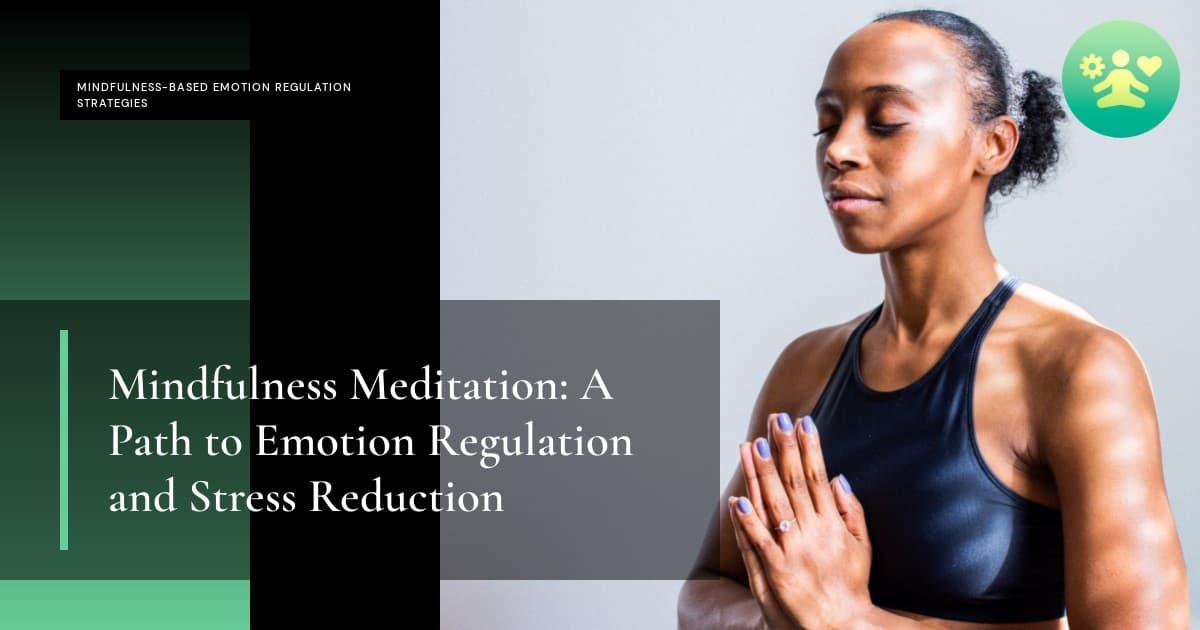
Mindfulness meditation is a powerful practice that has gained significant recognition for its ability to promote emotion regulation and reduce stress. With its roots in ancient Buddhist traditions, mindfulness meditation involves focusing one’s attention on the present moment, cultivating a non-judgmental awareness of thoughts, feelings, and sensations. This practice has been shown to have numerous benefits for overall well-being and mental health.
Exploring the Practice and Benefits of Mindfulness Meditation
What is Mindfulness Meditation?
Mindfulness meditation is a form of meditation that involves intentionally paying attention to the present moment in a non-reactive and non-judgmental way. It involves bringing awareness to one’s thoughts, feelings, and bodily sensations without getting caught up in them or trying to change them.
How Does Mindfulness Meditation Work?
Mindfulness meditation works by training the mind to focus its attention and cultivate a state of present-moment awareness. It involves practicing techniques such as focusing on the breath, body scans, and loving-kindness meditation to develop a heightened sense of self-awareness and compassion.
ALSO READ
Benefits of Mindfulness Meditation
Mindfulness meditation has been found to have numerous benefits for both mental and physical well-being. Research has shown that regular practice of mindfulness meditation can reduce stress, improve focus and attention, enhance emotional regulation, and promote overall feelings of calm and well-being.
Mindfulness Meditation for Emotion Regulation
Mindfulness meditation can be a powerful tool for managing and regulating emotions. By bringing awareness to one’s emotional experiences without judgment, individuals can develop greater emotional resilience and the ability to respond to challenging situations with clarity and compassion.
Mindfulness Meditation for Stress Reduction
Stress is a common experience in today’s fast-paced world, and mindfulness meditation has been shown to be an effective strategy for reducing stress. By practicing mindfulness, individuals can develop a greater sense of calm and equanimity, allowing them to navigate stressful situations with greater ease and resilience.
Steps for Establishing a Mindfulness Meditation Routine
Creating a Quiet and Distraction-Free Space
Creating a dedicated space for mindfulness meditation can help establish a routine and minimize distractions. Find a quiet and peaceful area where you can sit comfortably without interruptions.
Setting Aside Dedicated Time for Practice
Make a commitment to set aside a specific time each day for mindfulness meditation. Consistency is key, so find a time that works best for you and stick to it. Start with shorter sessions and gradually increase the duration as you become more comfortable.
Choosing a Meditation Technique
There are various meditation techniques to choose from, such as focused attention on the breath, body scan, or loving-kindness meditation. Experiment with different techniques to find the one that resonates with you the most.
Focusing on the Breath
The breath is a common anchor for mindfulness meditation. Focus your attention on the sensation of the breath as it enters and leaves your body. Whenever your mind wanders, gently bring it back to the breath.
Cultivating Non-Judgmental Awareness
One of the fundamental principles of mindfulness meditation is cultivating a non-judgmental awareness of your thoughts, feelings, and bodily sensations. Allow whatever arises in your awareness to be present without labeling it as good or bad.
Handling Distractions
Distractions are a natural part of meditation. When distractions arise, acknowledge them without judgment and gently guide your attention back to your chosen anchor, such as the breath.
Gradually Increasing Practice Duration
As you become more comfortable with mindfulness meditation, gradually increase the duration of your practice. Start with shorter sessions, such as five minutes, and gradually work your way up to longer periods, such as 20 to 30 minutes.
Scientific Evidence Supporting the Effectiveness of Mindfulness for Stress Reduction
Overview of Mindfulness Research
Scientific research on mindfulness has grown significantly in recent years, providing a wealth of evidence supporting its effectiveness for stress reduction and overall well-being. Researchers have explored various aspects of mindfulness, including its effects on the brain, mental health, and physical health.
Mindfulness Meditation and Stress Reduction Studies
Studies have consistently shown that mindfulness meditation is effective in reducing stress and promoting relaxation. Research has demonstrated that regular practice of mindfulness can decrease levels of stress hormones, such as cortisol, and improve overall feelings of well-being.
Neurological Effects of Mindfulness Practice
Neuroscientific studies have revealed that mindfulness meditation can lead to changes in the brain. Regular practice of mindfulness has been associated with increased activity in brain regions associated with emotion regulation and decreased activity in areas associated with stress and anxiety.
Mindfulness-Based Stress Reduction (MBSR) Programs
Mindfulness-Based Stress Reduction (MBSR) programs have been developed as structured interventions to help individuals reduce stress and enhance well-being. These programs typically involve a combination of mindfulness meditation, body awareness, and gentle movement practices.
Integrating Mindfulness into Healthcare and Therapy
Mindfulness-based interventions have gained recognition in the healthcare and therapy fields. Mindfulness has been integrated into various therapeutic approaches, such as cognitive-behavioral therapy (CBT) and dialectical behavior therapy (DBT), to help individuals manage stress, regulate emotions, and improve overall mental health.
Mindfulness for Specific Populations (e.g., Students, Professionals)
Mindfulness-based interventions have been adapted for specific populations, such as students and professionals. Schools and workplaces have implemented mindfulness programs to help individuals cope with stress, improve focus and productivity, and enhance overall well-being.
Limitations and Future Directions in Mindfulness Research
While research on mindfulness has shown promising results, there are still limitations and areas for further exploration. Future research could focus on the long-term effects of mindfulness practice, the mechanisms underlying its benefits, and the optimal delivery methods for different populations.
RELATED ARTICLES: